America's Team, But Not America's Contender: Are the Dallas Cowboys Overrated in 2026?
SportifyInsider | NFL Opinion & Analysis
November 4, 2026
Eight games into the 2026 NFL season, the Dallas Cowboys are 3–5, still searching for their first winning streak, and coming off one of their most damaging defeats of the year.
For a franchise that dominates national attention, the question is becoming increasingly difficult to avoid: are the Cowboys receiving championship-level attention without producing championship-level football?
America's Team Has an Identity Problem
Every NFL season begins with familiar expectations surrounding the Dallas Cowboys.
The spotlight follows them. Their games attract enormous attention. Their quarterback is scrutinized, their head coach is questioned, and every victory or defeat becomes a national conversation.
But through eight games of the 2026 season, the Cowboys have done little to justify being discussed alongside the NFL's genuine championship contenders.
Dallas sits at 3–5, with victories over Washington, Houston and Philadelphia offset by five defeats.
More troubling than the record itself is how the Cowboys have arrived there.
The team has shown enough offensive talent to compete with quality opponents, yet its defensive inconsistency, ineffective rushing attack and inability to finish games continue to undermine whatever momentum it builds.
The result is a franchise whose reputation remains considerably stronger than its on-field performance.
For years, the Cowboys have benefited from being America's Team.
But in 2026, they are increasingly looking like America's most discussed underachievers.
The Arizona Collapse Exposed Dallas' Biggest Weakness
If one game could summarize the Cowboys' season, their November 1 defeat against the Arizona Cardinals might be it.
Dallas appeared firmly in control, leading 24–10 early in the fourth quarter.
The defense had generated turnovers and pressured Arizona's quarterbacks. The offense had produced enough scoring opportunities to establish a significant advantage.
Then everything unraveled.
After replacing Jacoby Brissett late in the third quarter, backup quarterback Gardner Minshew helped transform Arizona's offense.
The Cardinals scored 20 points in the fourth quarter, including three touchdown passes from Minshew, before winning 33–30 in overtime on Chad Ryland's 42-yard field goal.
For Dallas, the defeat was more than another loss in the standings.
It exposed a team that struggled to respond when its opponent adjusted and momentum shifted.
Minshew completed 17 of 23 passes for 188 yards and three touchdowns. Running back Tyler Allgeier accumulated 147 rushing yards on just 11 carries, including a 63-yard touchdown run.
A defense that initially appeared dominant suddenly had no answers.
Even more concerning was Dallas' inability to close the game offensively.
After building its 24–10 lead, Dallas added only two field goals while Arizona scored three fourth-quarter touchdowns to force overtime.
The Cowboys then failed to score in the extra period.
Championship contenders are not expected to play perfectly every week.
They are, however, expected to protect significant late-game advantages, particularly at home.
Dallas failed that test spectacularly.
The Defense Is Undermining Everything Else
The Cowboys' defensive struggles cannot be dismissed as an occasional bad performance.
Through eight games, Dallas has allowed 3,083 total offensive yards while producing 2,736 yards of its own.
Opponents have rushed for 1,222 yards, compared with just 753 rushing yards for Dallas.
That is a difference of 469 yards on the ground.
These numbers reveal a fundamental imbalance.
The Cowboys are not simply losing because their offense occasionally struggles to score. They are consistently surrendering substantial yardage and allowing opponents to dictate the physical nature of games.
Against Arizona, Dallas recorded five sacks and forced two turnovers.
Those are usually the ingredients of a winning defensive performance.
Yet the Cowboys still allowed 33 points and lost.
That contradiction speaks to a larger problem: Dallas can generate individual defensive highlights without sustaining effective defensive football throughout a game.
A few sacks and takeaways cannot compensate for repeated breakdowns against the run or an inability to stop crucial drives.
Until the defense becomes more reliable, the Cowboys' offensive talent will continue carrying an unreasonable burden.
Is Dak Prescott Receiving Too Much Blame?
Whenever Dallas struggles, Dak Prescott inevitably becomes one of the central figures in the criticism.
As the franchise quarterback, Prescott deserves scrutiny. His position carries enormous responsibility, and highly paid quarterbacks are expected to elevate the players around them.
But blaming Prescott for the Cowboys' 3–5 record oversimplifies the situation.
Through eight games, Prescott has accumulated 2,046 passing yards.
Against Arizona, he completed 19 of 29 passes for 195 yards and one passing touchdown. He also added a rushing touchdown.
His performance was not flawless, and the offense's inability to close the game deserves criticism.
But Prescott was not responsible for allowing Arizona to erase a 14-point fourth-quarter deficit.
Nor can he independently fix a defense that has surrendered more than 3,000 yards through eight games.
The Cowboys need more consistency from their quarterback, particularly during decisive possessions.
However, the expectation that Prescott should compensate for every organizational weakness is unrealistic.
Dallas' problems are broader than one player.
And the longer the franchise treats every disappointment as a quarterback referendum, the easier it becomes to overlook the weaknesses surrounding him.
Brian Schottenheimer Has a Consistency Problem
The 2026 season is also becoming a serious test of Brian Schottenheimer's leadership.
Dallas has yet to record consecutive victories this season.
That statistic is particularly revealing because winning streaks help establish momentum and separate playoff contenders from inconsistent teams.
Consider the Cowboys' recent performances.
On Monday, October 26, Dallas defeated Philadelphia 38–21 on the road.
It was exactly the kind of divisional victory that could have provided a turning point.
The Cowboys had delivered a convincing performance against a familiar rival and appeared capable of building momentum.
Six days later, they surrendered a two-touchdown fourth-quarter lead against Arizona.
The problem is not that Dallas lacks the ability to produce an impressive performance.
The problem is that it cannot reliably reproduce one.
Following the Arizona loss, Schottenheimer described the game as a tale of two halves, reflecting the sharp contrast between Dallas' early defensive success and its second-half collapse.
That recognition is important.
But identifying mistakes is only the beginning. At some point, the coaching staff must demonstrate that it can make adjustments before familiar problems cost the team another victory.
Good teams do not simply respond to adversity with explanations.
They respond with corrections.
Dallas has not demonstrated enough of that ability in 2026.
The Cowboys Have Talent. But Are They Actually Good?
This is perhaps the most uncomfortable question facing Dallas.
The Cowboys possess recognizable offensive weapons, including Prescott, CeeDee Lamb and George Pickens.
They have enough individual talent to threaten opposing defenses.
Their defense has also shown flashes of disruptive potential, including the five-sack performance against Arizona.
But individual talent and team quality are not interchangeable.
A genuinely strong NFL team must consistently execute across multiple phases of the game.
It must control the line of scrimmage, adjust defensively, protect leads and perform under pressure.
The Cowboys have struggled with too many of those responsibilities.
Their 3–5 record is not necessarily evidence that every aspect of the team is poor.
It is evidence that the organization has failed to convert its strengths into consistent victories.
And that distinction matters.
Dallas may be more talented than its record suggests.
But until that talent produces reliable results, describing the Cowboys as a legitimate championship contender becomes increasingly difficult to defend.
The Remaining Nine Games Will Define Dallas' Season
There is still time for the Cowboys to change the conversation.
With nine games remaining, Dallas has not been mathematically eliminated from postseason contention.
Their next matchup against the Indianapolis Colts on November 8 offers an opportunity to recover from the Arizona defeat.
But the Cowboys must stop treating isolated victories as evidence of a turnaround.
One impressive game against Philadelphia did not solve their defensive issues.
One strong first half against Arizona did not prove that they had learned how to finish games.
The standard must become consistency.
Dallas needs to establish a dependable rushing attack, improve its defensive discipline and demonstrate that its coaching staff can make meaningful adjustments when opponents change their approach.
Most importantly, the Cowboys need to win consecutive games.
Until that happens, talk of a postseason resurgence remains more hopeful than convincing.
The Brand Is Bigger Than the Football
The Dallas Cowboys remain one of the NFL's most commercially powerful franchises.
That is not inherently a problem.
The franchise's popularity reflects decades of history, passionate supporters and the remarkable business operation built under Jerry Jones.
But commercial strength should not be confused with competitive credibility.
The Cowboys do not receive attention solely because of what they accomplish on Sundays.
They receive attention because they are the Cowboys.
That distinction has become especially visible this season.
At 3–5, Dallas remains a major national talking point even as more successful teams build stronger cases for postseason contention.
The spotlight has become a permanent feature of the franchise, independent of its record.
The danger is not necessarily that ownership has stopped caring about winning.
There is no evidence that the Cowboys deliberately accept losing.
Rather, the danger is that the organization's reputation can remain intact even while its football performance falls short.
The Cowboys can continue dominating conversations without dominating opponents.
And that is precisely why the franchise deserves more scrutiny, not less.
Final Verdict: America's Team Must Earn Its Reputation on the Field
Eight games into the 2026 season, the Dallas Cowboys have provided more reasons for concern than confidence.
Their defense has been inconsistent. Their running game has struggled. Their coaching staff has failed to establish sustained momentum.
And their latest defeat against Arizona demonstrated how quickly a promising performance can turn into another disappointing result.
None of this means the Cowboys are incapable of improving.
Nine games remain, and the NFL has repeatedly shown that seasons can change quickly.
But improvement must be measured through results rather than reputation.
The Cowboys cannot continue relying on their talent, their history or the attention surrounding the franchise as substitutes for consistent football.
At 3–5, Dallas has not earned the right to be discussed as a serious Super Bowl contender.
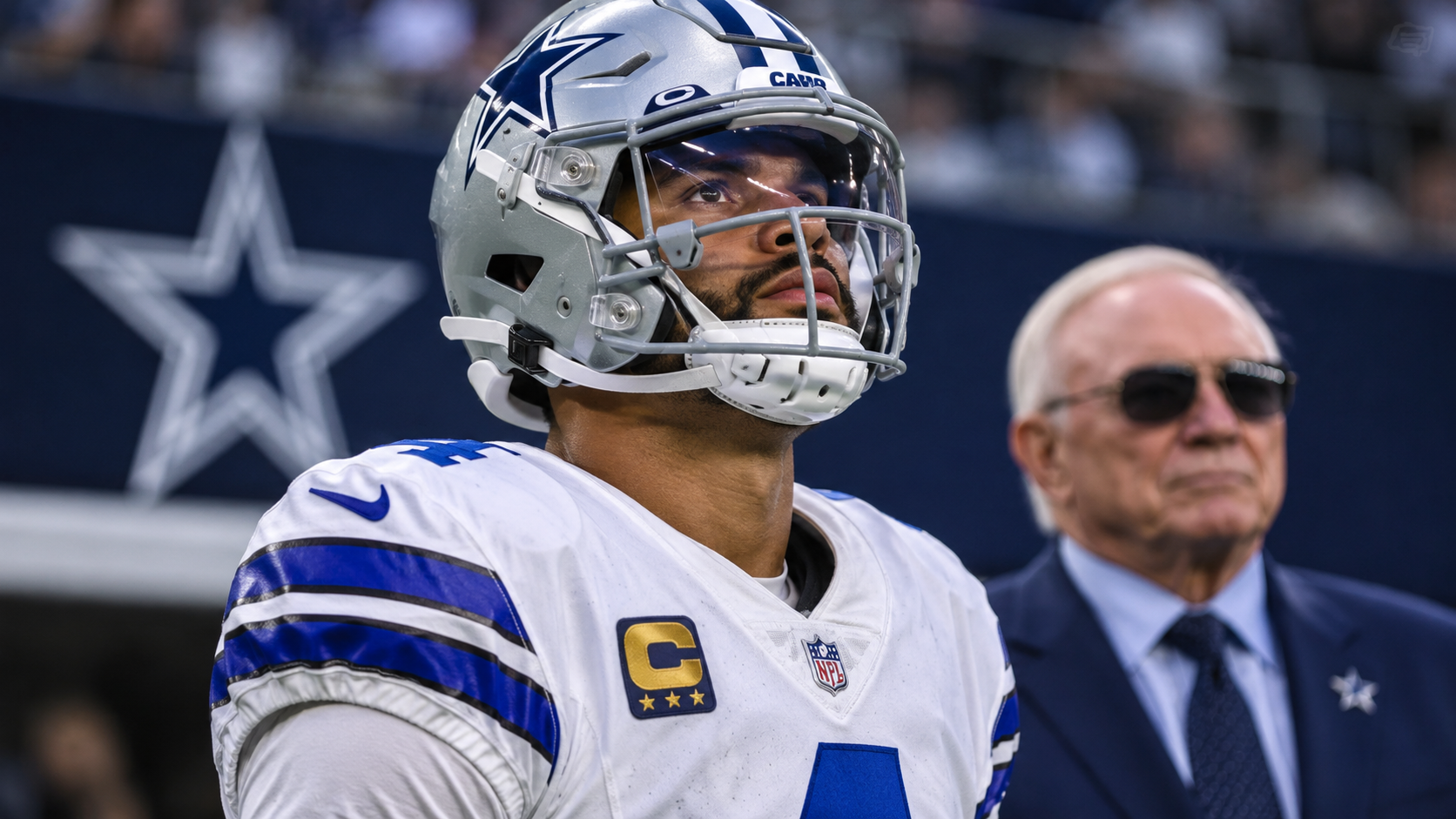
America's Team is still one of football's biggest brands. But until the Cowboys learn how to win consistently, that famous star will command more attention than the team wearing it deserves.
---
Sources and further reading
- Dallas Cowboys — Official 2026 schedule: https://www.dallascowboys.com/schedule/
- Dallas Cowboys — 2026 team statistics: https://www.dallascowboys.com/team/stats/
- Dallas Cowboys — November 1 game recap: https://www.dallascowboys.com/news/game-recap-dallas-shocked-in-ot-33-30
- Dallas Cowboys — Film review of the Arizona loss: https://www.dallascowboys.com/news/tape-talk-film-review-from-cowboys-33-30-overtime-loss-to-cardinals
- Arizona Cardinals — November 1 game recap: https://www.azcardinals.com/news/cardinals-cowboys-overtime-minshew-magic-33-30-victory
NFL
Cowboys’ 2026 Season: More Hype Than Results?
By SportifyInsider Editorial
The Dallas Cowboys remain one of the NFL's biggest brands, but their 2026 season raises familiar questions about whether their on-field performance matches the hype. With expectations high and consistency elusive, is America's Team still a legitimate contender—or has its reputation outgrown its results?
Share this story